Blog article
How Packaging Decisions Affect Haircare Reorders
- Published
- August 7, 2026
- Last verified
- August 7, 2026
TL;DR
Packaging can become the binding constraint on a haircare reorder even when the formula is unchanged. Build a controlled bill of materials for the approved pack, review quantities at component level, and treat every proposed replacement as a change path touching the relevant formula-pack, dispensing, artwork, setup, cost, timing, leftover, and approval records. Reconfirm present conditions for the actual run.
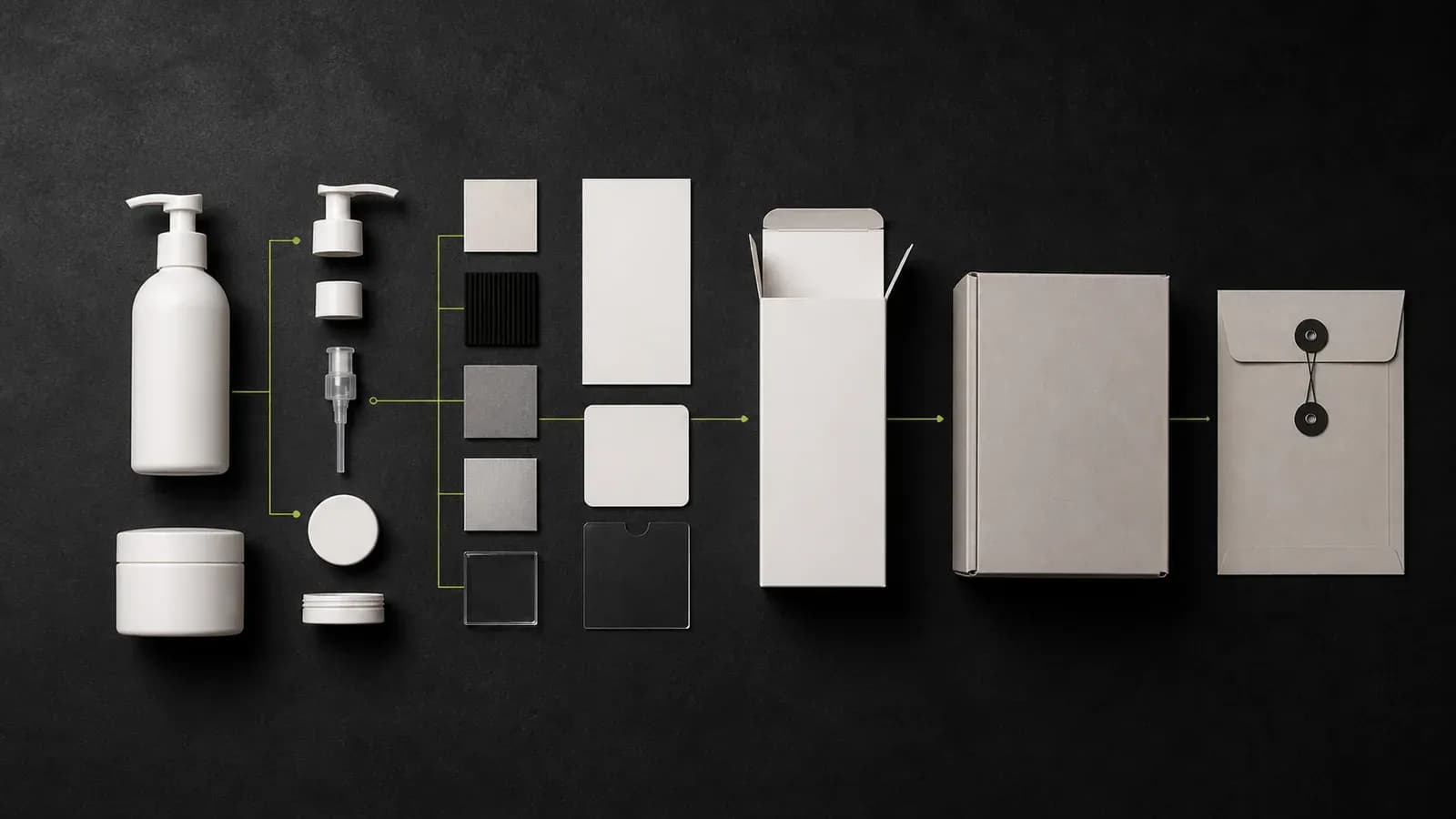
Packaging decisions affect haircare reorders because a finished pack is a system, not one bottle. The container, closure or dispenser, decoration, label, carton, insert, seal, and case pack can each bring a different source, minimum, setup, availability, specification, and review path. A formula may stay the same while one packaging input changes the viable quantity, timing, cost, appearance, or work required for the next run.
Next step
See where packaging fits in the project path
Connect packaging feasibility and approvals to the wider brief, sample, production, and reorder-planning stages.
Start with the packaging system, not the bottle
A product photograph can show the intended appearance, but it cannot identify the complete pack. Reorder planning needs the controlled parts behind that appearance: the exact container and closure combination, dispensing direction, material and color inputs, fill size, decoration method, approved artwork, label or carton specification, pack-out, and the formula-pack combination that was actually reviewed. If one piece is described only as “same as last time,” the team still has to discover what last time means.
| Packaging decision | What can change at reorder | Record to retain |
|---|---|---|
| Primary container and closure | Source, availability, production minimum, material, color, capacity, dimensions, neck finish, liner, seal, closure, or dispenser. | Approved component identity, source, technical inputs, material, color, dimensions, closure match, and physical reference. |
| Formula-pack interaction | A formula revision, replacement component, dispenser change, fill condition, dose, use pattern, transport, or storage assumption can change the review question. | The formula and packaging combination that was actually reviewed and approved. |
| Decoration and labels | Decoration method, setup, artwork, printable area, finish, color reference, plate, screen, tooling, label stock, adhesive, or minimum. | Approved artwork, print specifications, color references, finish, and change history. |
| Cartons and pack-out | Dieline, material, dimensions, artwork, finish, insert, seal, case quantity, orientation, shipper, or freight configuration. | Approved dieline, artwork, material, pack-out, and case information. |
| Setup, tooling, and production files | A supplier, method, artwork, color, size, or component change can affect setup, plates, screens, molds, masters, proofing, or other preparation. | The supplier-specific production file, approved proof, setup ownership, reusable asset reference, and recorded change history. |
| Replacement and leftover exposure | A replacement can introduce a new minimum while prior pumps, labels, cartons, or other components remain unused or no longer match. | Approved substitution decision, affected records, usable remaining stock, written disposition, and the new version baseline. |
Component and partner conditions vary. Reconfirm actual availability, compatibility, quantity, cost, and timing before each production run.
Build a packaging BOM specific enough to reorder
Treat packaging as a controlled bill of materials rather than a visual mood board. The BOM does not need to solve every future availability question, but it should identify what the team means by the approved pack. Give each item a stable description, connect it to the relevant technical or artwork file, record its decision status, and retain the approved physical reference when that is part of the project. The more a specification depends on a particular supplier or method, the more important that relationship becomes.
Packaging BOM checklist
- 01
Identify every component
Keep source or supplier, component identifier, material, dimensions, capacity, color, neck finish, closure or dispenser, and the approved physical or photographic reference.
- 02
Control visual specifications
Record the applicable dieline, artwork file, decoration method, printable area, color references, finish, label stock, adhesive, carton material, proof, and approved version.
- 03
Keep formula and pack connected
Tie dispensing, closure, leakage, stability, compatibility, or other agreed functional review to the exact formula and component combination evaluated. Do not transfer a conclusion to an unidentified replacement.
- 04
Connect the secondary pack
Link decoration, label, carton, seal, insert, case pack, and freight configuration to the same approved finished-pack version.
- 05
Record reusable assets and owners
Name the owner of artwork, source files, plates, screens, tooling, proofs, stored components, and any supplier-held production reference used again later.
- 06
Keep component balances visible
Track the quantity bought, quantity consumed, expected balance, storage or ownership condition, and decision path for components that do not match the finished-goods quantity.
Treat a replacement as a change path, not a matching label
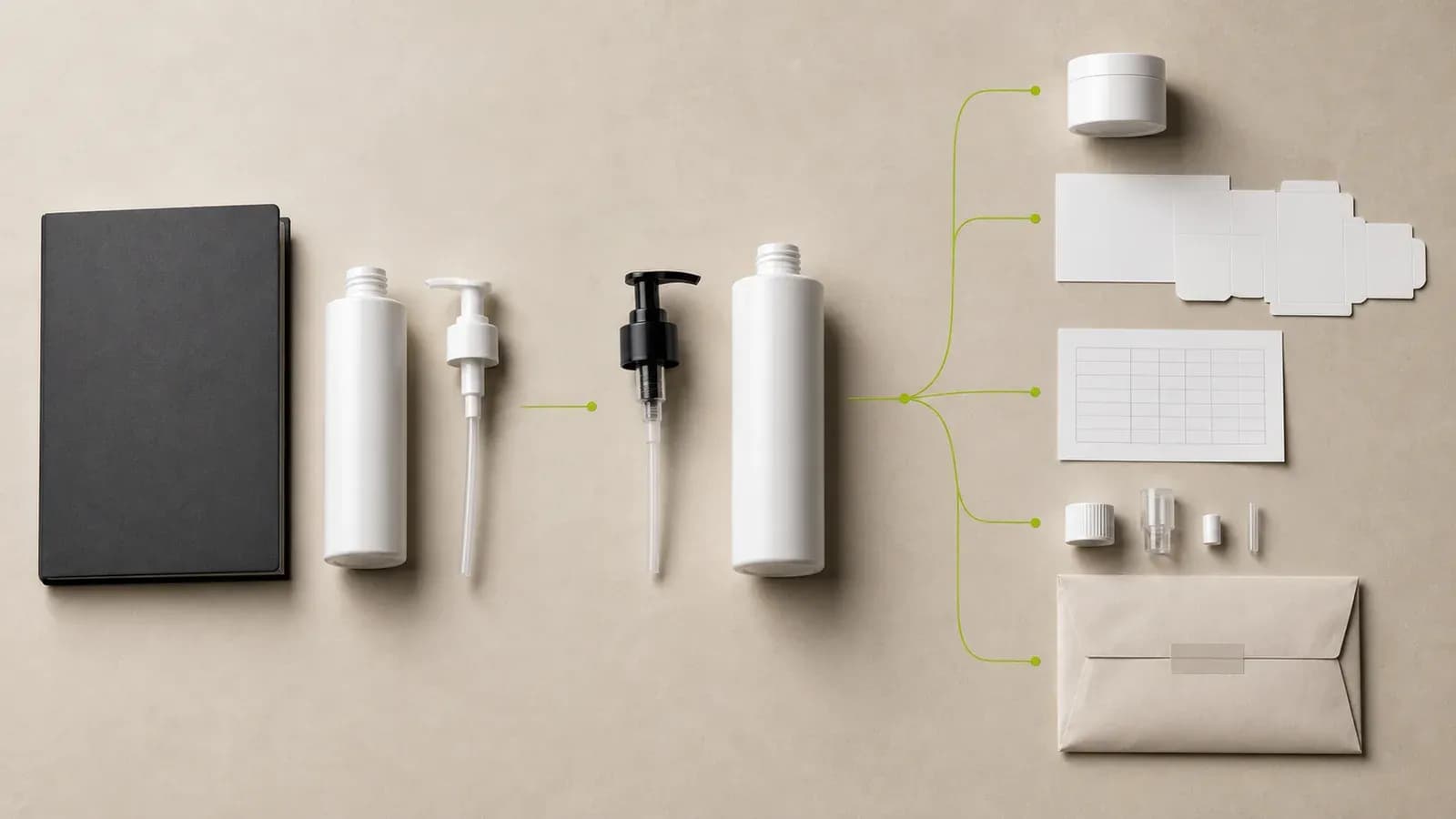
“Equivalent,” “similar,” and “same size” are not complete packaging specifications. A replacement bottle can use a different material, weight, wall construction, neck finish, tolerance, color, surface, or printable area. A replacement pump can change fit, dose, output, lock, dip tube, priming, or use experience. Even when the customer-facing appearance is close, the underlying change may touch the formula-pack review, decoration, artwork, fill setup, pack-out, quantity, cost, timing, or available documentation.
Begin with the reason for the substitution and identify the records it could affect. Then decide what must be checked, sampled, updated, or approved for this project. The answer depends on the actual component, formula, use, target market, requested claim direction, engaged partners, and agreed review scope. The purpose of change control is to make that path explicit—not to assume every change is material or immaterial before it is examined.
Replacement impact review
Map the replacement against these connected decisions before the new version becomes the next baseline.
- 01
Identity and source
Confirm the proposed source, component identity, technical inputs, dimensions, material, color, closure relationship, and reason the prior component is not being used.
- 02
Formula-pack and functional review
Determine which dispensing, fit, seal, compatibility, stability, leakage, drop, transport, storage, or other project-specific questions need review for the new combination.
- 03
Artwork and decoration
Check dielines, printable area, label dimensions, decoration setup, artwork placement, color and finish references, proofs, and any supplier-specific production file.
- 04
Quantity and economics
Reconfirm the component minimum, finished-goods quantity relationship, setup, unit and project costs, cash timing, and any separate purchase commitment.
- 05
Leftover and transition control
Record what remains from the prior version, who owns or stores it, whether it can still be used, and which decision prevents an accidental mix of old and new inputs.
- 06
New approved baseline
Approve and date the new component, artwork, pack, and related sample references, then mark the prior version as superseded or otherwise state its status.
Separate required packaging features from preferences
Not every visual preference should carry the same weight as a use, brand, channel, or target-market requirement. Before availability changes, write down why a feature matters. A dispensing format may be required because of the intended application. A tamper feature may be part of the channel or market brief. A specific silhouette may be central to the approved brand system. A finish that is simply familiar may be flexible if another route protects the job, hierarchy, and economics. This distinction gives the team a useful basis for evaluating an alternative without turning every difference into an automatic rejection.
| Decision status | What to record | How it guides a replacement review |
|---|---|---|
| Required | The customer job, intended use, brand rule, channel condition, target-market input, or supportable commercial reason behind the feature. | A proposed alternative must still meet the stated requirement or trigger an explicit brief decision. |
| Preferred | The advantage the business sees, the tradeoff it is willing to consider, and the decision owner. | The team can compare the preference with quantity, cost, timing, availability, and downstream change work. |
| Open | The unresolved question, evidence or sample needed, owner, and point when the choice must be made. | An option remains in review without being mistaken for an approved or available component. |
| Approved baseline | The exact component and connected formula, decoration, artwork, specification, sample, and approval references. | The next proposed version can be compared with an identifiable starting point rather than a memory of the appearance. |
The status belongs to the project brief. It does not replace technical, market, claims, documentation, partner, or legal review for the actual packaging option.
Review packaging quantities at component level
Finished-goods quantity is only one number in the packaging plan. A bottle, pump, label, carton, decoration setup, or case pack can have a different ordering increment or binding minimum. The usable quantity can also be affected by expected process loss, samples, QC retains, pack-out, or a component balance from the prior run. Map the quantity relationship before treating one supplier number as the product MOQ.
If components remain after production, keep the balance visible with its identity, ownership, storage condition, and intended disposition. Remaining packaging is not automatically usable inventory for the next run: the formula, artwork, label, component condition, target-market inputs, and wider project direction may change. It is a commercial input to the next review, not a guarantee that a future quantity or cost will improve.
Open the packaging checkpoint with a current brief
Packaging reorder checkpoint
A useful packaging checkpoint starts with the prior approved baseline and adds current operating inputs.
- 01
Prior approved pack
Bring the approved BOM, component and artwork versions, formula-pack reference, proofs or physical references, pack-out, and production change history.
- 02
Current quantity context
State the requested finished-goods quantity, required date, current inventory and sell-through inputs, and any component balances believed to remain.
- 03
Proposed changes
List every requested formula, component, decoration, artwork, label, carton, market, claim-direction, or pack-out change instead of burying it inside “reorder.”
- 04
Present supply conditions
Reconfirm component availability, minimums, ordering increments, setup, replacement options, production inputs, cost, capacity, and timing with the relevant partners.
- 05
Owners and handoffs
Name the business, FormuLaunch, manufacturing, packaging, artwork, testing, documentation, and approval responsibilities required for the review.
Next step
Plan a private label haircare line
See how this decision fits into channel-led product-line planning, launch coordination, and reorder readiness.
Haircare packaging reorder FAQ
FAQ
Questions before you start
Can packaging determine the MOQ for a haircare reorder?
Packaging can be the binding constraint when a container, closure, decoration, label, carton, setup, or case-pack condition sets the viable quantity or timing. The formula and finished-goods quantities still matter. Compare all project minimums and ordering increments rather than assuming one number controls every run.
What should happen when the original bottle or pump is unavailable?
Record the exact proposed component and compare it with the approved baseline. Review the affected dispensing, formula-pack, artwork, decoration, filling, quantity, cost, timing, documentation, and pack-out questions. Approve a new identified version before it becomes the production reference.
Does a prior packaging review cover every future run?
Not by itself. The prior combination is an important baseline, but the current formula, component, intended use, storage or distribution assumptions, requested changes, and agreed review scope still need consideration. Do not transfer a prior conclusion to an unidentified replacement.
How should leftover packaging components be handled?
Track the remaining quantity, exact identity, ownership, storage condition, and intended disposition. Then confirm whether the components still match the current formula, artwork, label, pack-out, target market, and project direction. Remaining stock is an input to review, not automatic approval for reuse.
When should packaging be reviewed for the next run?
Open the checkpoint while the business can still assemble the current brief, review component balances, investigate proposed changes, and respond to present availability, minimum, setup, proofing, production, and timing inputs. The appropriate trigger depends on the actual packaging system and project—not a universal lead-time promise.
Next step
Check Your Project Fit
Share the intended formats, required packaging features, decoration direction, quantity context, and reorder expectations for a coordinated feasibility review.