Decision guide
How Many Products Should a Haircare Line Launch With?
- Published
- August 7, 2026
- Last verified
- August 7, 2026
TL;DR
Launch the smallest scope in which every product has a distinct customer job, observable demand input, clear channel moment, supportable SKU economics, operating owner, and reorder learning plan. Put each candidate in one of three places—launch now, park for later, or remove from the current line—and record the evidence that would change that decision.
A haircare line should launch with the smallest scope that solves a clear customer need, makes sense in the existing channel, and leaves the business able to support each product through inventory and a later run. The answer may be one hero product, a natural pair, three distinct roles, or a wider range backed by stronger evidence. Product count is the result of the decision—not the starting rule.
Next step
See how launch scope connects to the full project path
Place product-count decisions inside the wider brief, feasibility, approval, production, and reorder-planning sequence.
Start with the product job that has earned a place
List the customer problem, use moment, channel evidence, and operating owner for each candidate product. Then ask whether it does a job another candidate cannot already do. A different format, scent, name, or marketing angle does not by itself create a separate role. Count only the products that add a distinct reason to buy and a commitment the business is prepared to carry.
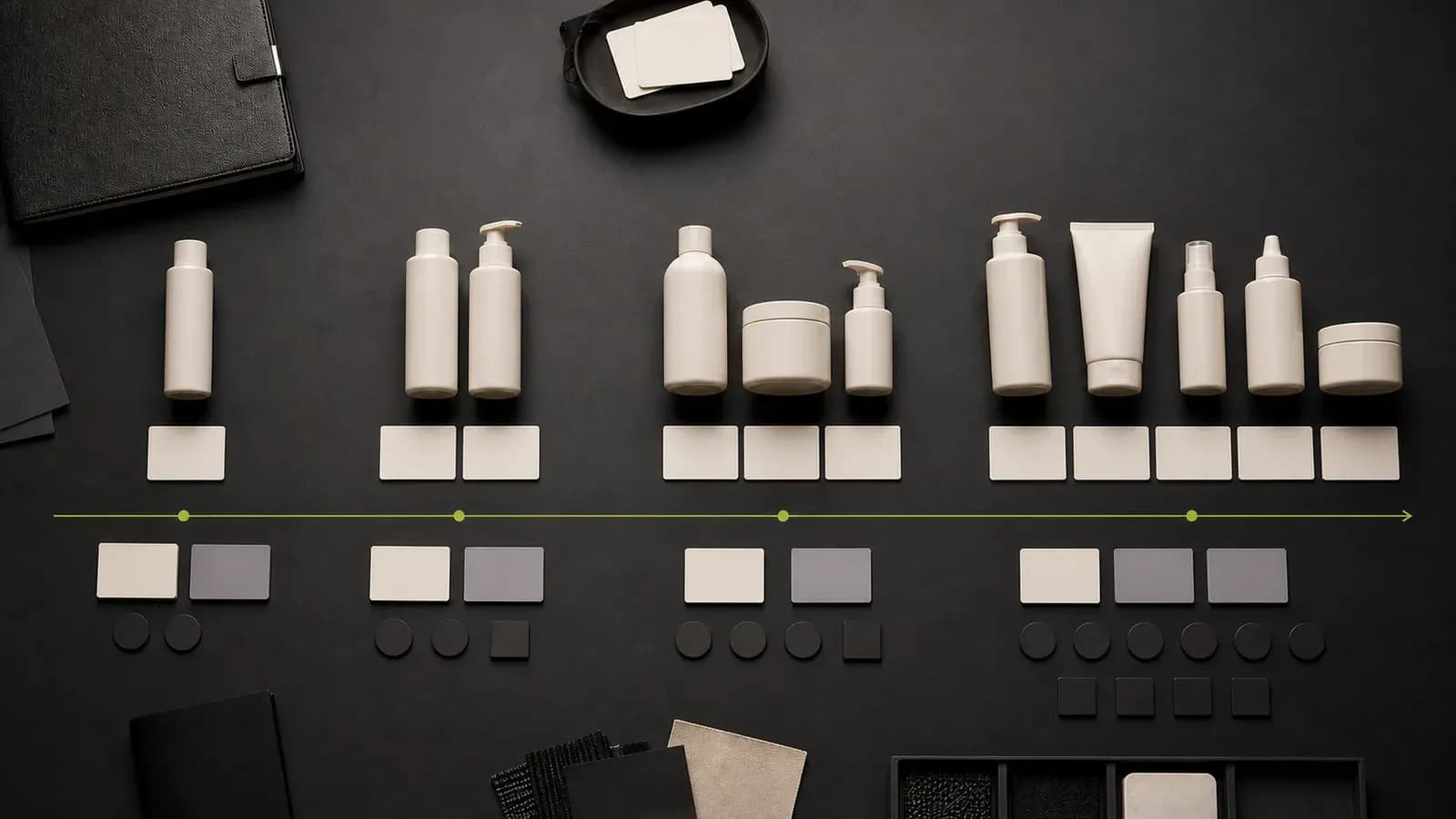
Choose the smallest scope that works as a line
| Starting scope | When it can fit | What it must prove | Main watchout |
|---|---|---|---|
| One hero product | One customer need or product role is materially clearer than the rest, and the channel can explain it without a wider routine. | That role can support its MOQ, inventory, margin, education, service, and later-run plan on its own. | The product may lack a natural companion or complete-routine story. |
| Two-product pair | Two roles are naturally used or sold together and the pair is clearer than either a single item or a broader range. | Each product has a distinct job, the connection between them is easy to teach, and both can support their own economics and reorder case. | A weak second product can dilute demand and add a full second set of commitments. |
| Three product roles | Cleanse, Treat, and Finish each solve a distinct part of a routine the channel can teach and sell. | The business can support three separate briefs, MOQs, samples, artwork tracks, inventory positions, education needs, and later-run decisions. | A routine story can hide that one role has weak standalone demand. |
| Four or more products | Existing sales evidence, a broad channel, or a staged expansion supports genuinely different roles. | Every added product has its own operating owner, customer need, channel moment, economic case, and learning plan. | Complexity, cash exposure, review tracks, and slow-moving inventory increase with each SKU. |
The framework supports a decision; it does not prescribe a universal launch count or predict sell-through.
Score each candidate before you count the line
Launch-scope evidence checklist
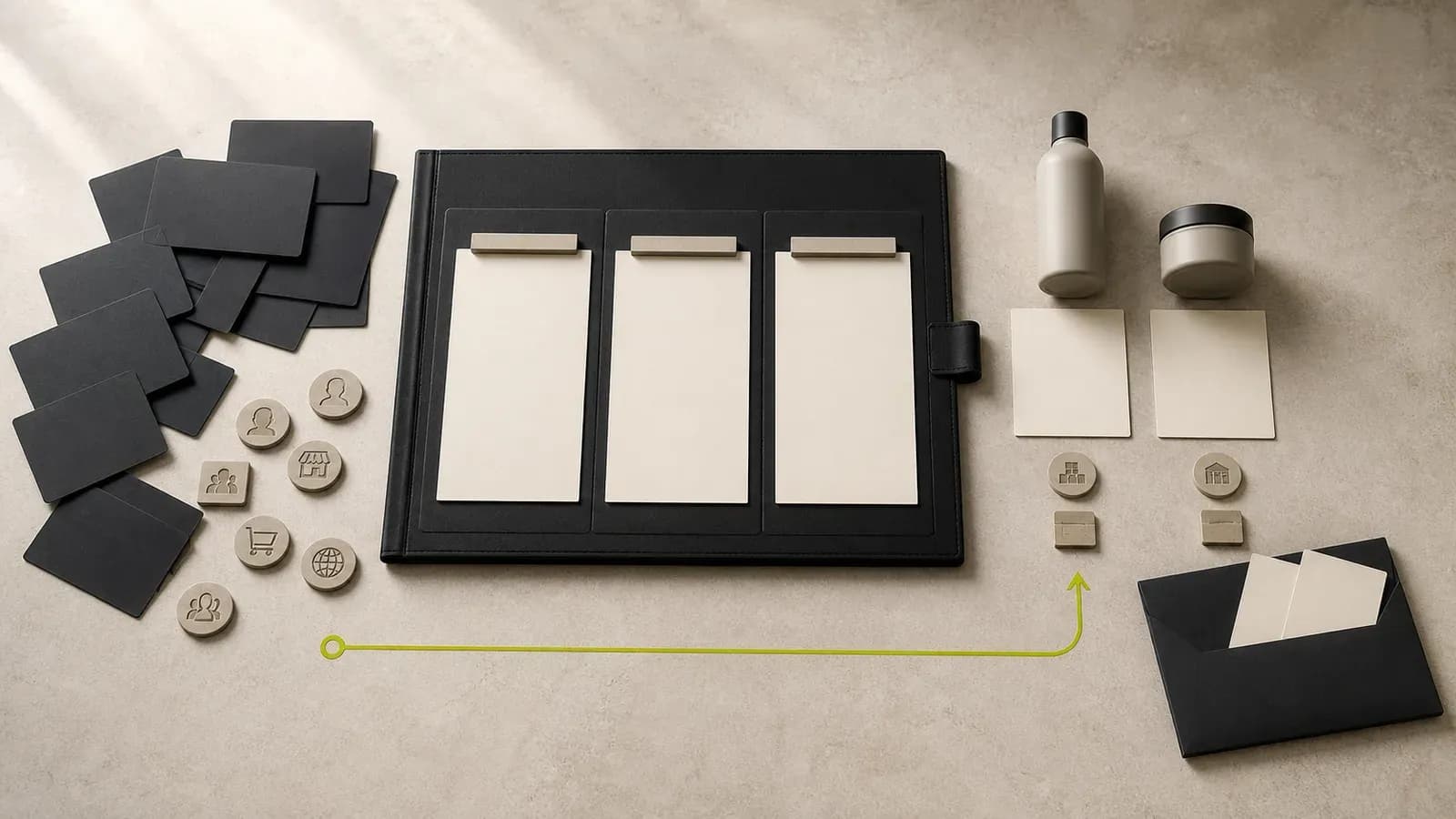
A candidate needs a commercial reason and an operating plan. Record the evidence and open question for each field instead of assigning a vague high, medium, or low score.
- 01
Observable demand signal
Which repeated customer request, stylist recommendation, distributor question, existing sale, service moment, or channel behavior points to this product job?
- 02
Distinct customer job
Can the business explain when, why, and how this product is used without confusing it with another proposed item?
- 03
Channel moment and owner
Who introduces, recommends, sells, educates, services, and follows up on this product in the existing channel?
- 04
SKU-level commitment
Can the business support the formula path, packaging, artwork, sampling, MOQ, leftover inputs, inventory, cash, and team attention for this item?
- 05
Education and support load
What instructions, staff training, stylist education, product pairing, or customer follow-up must exist for the product to be used and recommended as intended?
- 06
Reorder learning plan
Which sell-through, recommendation, repeat-order, inventory, or customer behavior would support keeping, changing, pairing, or retiring the product?
Use three decisions: launch, park, or remove
A candidate does not need to disappear because it misses the first launch. Put it in one of three places. Launch now when the role is distinct and the demand, channel, economics, owner, and learning plan are credible enough to carry. Park for later when the need may be real but a key input remains unresolved; record the evidence that would reopen the decision. Remove it from the current line when it duplicates another job or lacks a believable channel path. Parking a product is useful only when the reason and review condition are written down.
| Decision | Use when | Record |
|---|---|---|
| Launch now | The product has a distinct job, visible demand input, clear channel moment, supportable commitment, and operating owner. | First-run assumptions, success signal, responsible owner, and later-run review point. |
| Park for later | The idea may fit, but demand, differentiation, economics, channel support, or ownership is not clear enough for the first scope. | Open question, evidence needed, owner, and event or date that triggers another review. |
| Remove from current line | The product duplicates another job, lacks a credible channel path, or adds commitment without a separate customer reason. | Reason for removal so the same unsupported idea is not added back without new evidence. |
A disposition is a working decision, not a sales forecast. Reopen it when the recorded evidence, economics, channel, or operating condition changes.
Decide the expansion rule before launch
The first scope should teach the business what to keep, change, pair, or add. Decide which evidence will trigger another product discussion: repeated requests for a missing job, strong pair behavior, a stable reorder of the existing scope, an unresolved education gap, or a change in channel reach. This prevents the roadmap from becoming a list of ideas with no connection to actual customer behavior or operating capacity.
Haircare launch product-count FAQ
FAQ
Questions before you start
Can one product be a credible haircare launch?
Yes, when one customer need is materially clearer than the rest, the channel can explain and sell the product without a wider routine, and the business can support its MOQ, education, inventory, and later-run plan. Record the evidence that would justify adding a companion later.
When does a two-product pair make sense?
A pair makes sense when the two products have distinct jobs, are naturally recommended or used together, and both can carry their own formula, packaging, MOQ, inventory, education, and later-run commitment. A weak companion should not be added only to make the launch look larger.
When do three product roles make sense?
Three roles can fit when Cleanse, Treat, and Finish each solve a separate customer need the channel can teach and sell, and the business can support three briefs, MOQs, approval tracks, inventory positions, and later-run decisions. The routine should be the result of distinct demand, not the reason to overlook a weak role.
When should a haircare line add more products?
Reopen the decision when the added product has a distinct job, new demand evidence, supported project economics, a clear channel moment, and an operating owner. A stable later run of the first scope can be more useful evidence than adding products before the launch has produced any learning.
Next step
Plan a private label haircare line
See how this decision fits into channel-led product-line planning, launch coordination, and reorder readiness.
Next step
Check Your Project Fit
Share the demand signal, proposed roles, channel, SKU-level quantity context, and reorder plan behind your intended launch scope.